

A vaccine is a substance that stimulates the production of antibodies and confers immunity against one or more diseases. It is composed of a modified form of the pathogen named antigen. An antigen can be a live, attenuated germ or an inactivated germ or germ fraction (inactivated vaccine), or a toxin.
Some vaccines are produced by genetic engineering, using an animal or yeast cell to produce the vaccine antigen (e.g. hepatitis B). These are called recombinant vaccines.
When administered, vaccines leverage the body's natural defences to establish protection. They trigger the immune system to generate antibodies and create a memory of the disease, enabling rapid elimination of the pathogen if encountered again in the future.
Manufacturing process
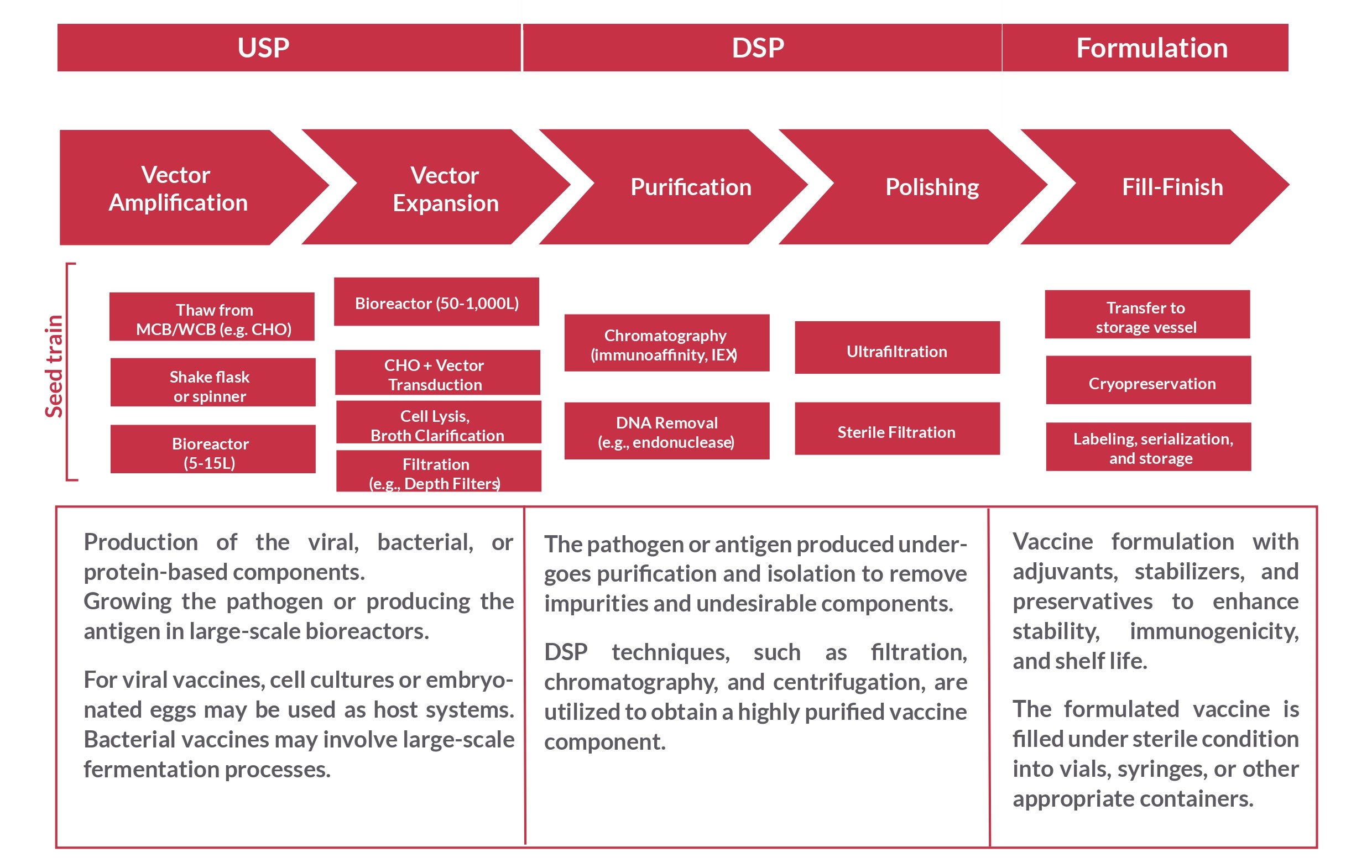
Using the example of the Inactivated polio vaccine (IPV)
Raw materials
USP
Vector amplification & expansion
Nutrient-rich media containing sugars, amino acids, vitamins, and
minerals, antibiotics, serum or serum free supplements
Polio Virus cultivation
The viruses are cultivated in Vero cells, a continuous line of monkey
kidney cells, and the culture medium is replaced by M-199 without
calf bovine serum
Virus inactivation
Formalin
DSP
Buffers to maintain the desired pH range: phosphate buffers, TRIS
buffers, saline solutions
Detergents: Triton X-100, Tween 20, and sodium deoxycholate
Stabilizers: sugars (sucrose), polyols (mannitol, sorbitol), human
serum albumin (HSA), bovine serum albumin (BSA)
Preservatives: thimerosal, phenol, or formaldehyde
Salts to maintain the ionic strength: sodium chloride, potassium
phosphate
Virus purification
Purified by three liquid chromatography steps, including anion
Filtration
Depth filters and membrane filters

Final formulation
Each dose of IPV vaccine is formulated to contain specific D antigen
units of Type 1, 2, and 3 poliovirus, and it is diluted with M-199
medium.
Stabilizers: human serum albumin (HSA), bovine serum albumin
(BSA), or sucrose
Buffers: phosphate, acetate or citrate
Preservatives: thimerosal or 2-phenoxyethanol Many vaccines are
now formulated without preservatives
Excipients: adjuvants (e.g., aluminum salts), stabilizers (e.g., polysorbate 80, polyol), or bulking agents (e.g., lactose or mannitol)
Get in touch
Contact us for more information and support in your biologics development process!
 e-mail us