

Rising whey protein prices and increasing supply volatility are putting pressure on food and beverage manufacturers globally. At the same time, consumer expectations around taste, texture, and nutritional value remain unchanged. This combination is forcing manufacturers to rethink traditional formulation approaches and explore more flexible protein strategies.
One of the approaches gaining traction is the use of hybrid protein systems, where dairy proteins are partially replaced with alternative protein sources. Rather than positioning this as a direct substitution, the trend reflects a broader shift towards formulation optimisation—balancing cost, functionality, nutrition, and supply resilience.
Market pressure: cost volatility and supply dependency
Whey protein has long been a key ingredient in high-protein applications due to its strong nutritional profile and functional performance. However, recent market developments have highlighted structural challenges:
-Price volatility driven by fluctuations in dairy supply chains
-Limited availability in key regions
-High dependency on a single protein source
For manufacturers operating in competitive categories such as sports nutrition, meal replacements, and fortified foods, these dynamics create margin pressure while limiting formulation flexibility.
As a result, the focus is shifting from optimisation within whey-based systems to diversification of protein sources.
Hybrid protein systems: from substitution to optimisation
A commonly applied strategy is the partial replacement of whey protein with alternative proteins. Early development work across the industry shows that even at relatively low inclusion levels (e.g. ~20%), it is possible to maintain key product attributes such as sensory profile, texture and mouthfeel and functionality. For replacement with collagen peptides, this could even increase to 40%.
This indicates that hybrid solutions are not simply a compromise but can be a technically viable formulation strategy when designed carefully. Importantly, the objective is not to fully replace whey, but to reduce dependency while optimizing overall product performance and cost structure.
No one-size-fits-all
The choice of alternative protein depends strongly on the application and the desired product positioning. Different protein sources offer distinct functional and sensory characteristics:
-Plant proteins (pea, fava, chickpea): Provide good stability and enable plant-forward positioning, but may require flavour optimization.
-Cereal proteins (oat, rice): Offer mild flavour profiles that easily integrate into different recipes
-Soy protein: Provides functionality and sensory performance closer to whey.
-Collagen peptides: Good whey replacer in functionality and sensory performance. Brings additional positioning potential for sports and beauty nutrition.
-Yeast protein: Sustainable, complete protein source that contains dietary fiber and iron. Because of its sensory profile, it is also perfect for savoury applications.
-Blended systems (e.g. pea–rice combinations): Allow optimization of amino acid profiles and functional performance.
Rather than relying on single ingredients, many formulations use tailored blends to balance nutritional quality, sensory performance, and processing behaviour.
Economic impact: measurable cost savings
One of the key drivers for hybrid formulations is cost reduction. Internal tests in our Human Nutrition Development Centers show that partial whey replacement of 20% can lead to estimated cost savings up to 17%. Replacement of 40% whey by collagen peptides can lead to an estimated cost saving of even 25%.
The actual savings depend on factors such as the selected alternative protein, inclusion level, market prices of raw materials and application specific requirements like quality statements for example. This makes hybrid approaches particularly relevant in categories with high protein inclusion levels, where ingredient costs have a significant impact on overall product economics.
Beyond cost: positioning opportunities
In addition to cost optimisation, hybrid protein systems enable new positioning opportunities in the market:
-Plant-forward or flexitarian positioning
-Sustainability-driven narratives
-Expanded functionality or nutritional benefits
As consumer preferences continue to evolve, hybrid systems can support more diverse product concepts without requiring a complete shift away from dairy proteins.
Technical considerations: maintaining product performance
Despite their advantages, hybrid protein systems introduce complexity in formulation. Replacing whey protein impacts multiple product parameters, including:
-Solubility and dispersibility
-Viscosity and texture
-Flavour profile and aftertaste
-Nutritional composition
Ensuring product quality therefore requires careful selection, formulation expertise, and application testing. In some cases, adjustments in flavour systems or process conditions are needed to achieve the desired result.
Barentz developed several ready-to-use hybrid protein concepts that balance cost efficiency, functionality, and positioning opportunities. Examples include:
-Hybrid high protein and/ or meal replacement shakes
-Hybrid high protein and/ or meal replacement soups
-Hybrid high protein bar
-Hybrid high protein treat
-Dairy-style drinks
As market pressures continue, hybrid protein formulations are increasingly viewed not as a temporary workaround, but as part of a longer-term shift towards more flexible and resilient product design.
About Barentz
At Barentz, hybrid protein concepts are developed and tested in dedicated Human Nutrition technical centres, combining ingredient expertise with application know-how.
Explore our hybrid protein solutions.
💡 Do you need help to define which protein alternative could be the best fit for your application or any other questions? Contact us via HN@barentz.com!

Hybrid protein bar
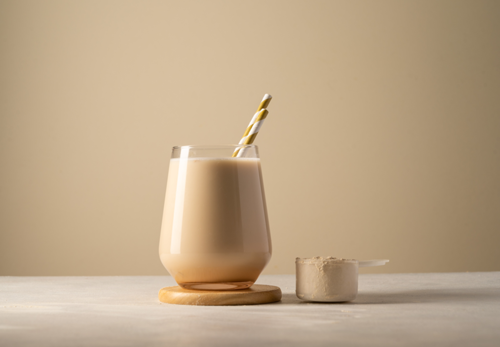
Hybrid protein shake
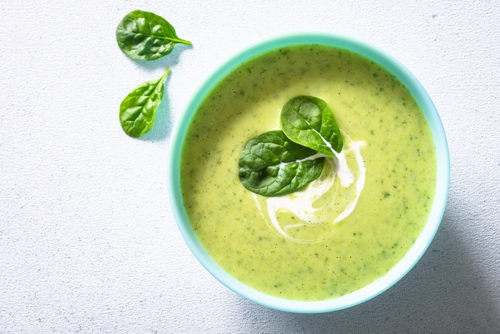
Hybrid green soup

Healthy aging hybrid dessert